


Zapp Chess: Online Chess Game
4.4112.00 Reviews
App Specs
- Version
- 2.0.120
- Updated On
- License
- Free
- Downloads
- 100,000+
- Developer
- DAB Games
- Categories
- Board
- Platform
- Android
Screenshots
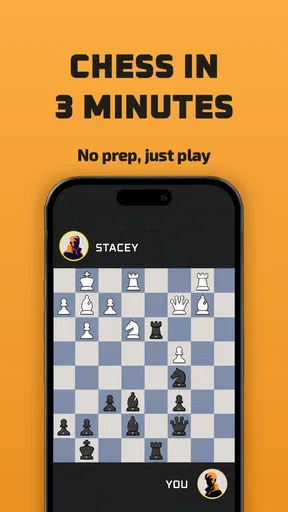
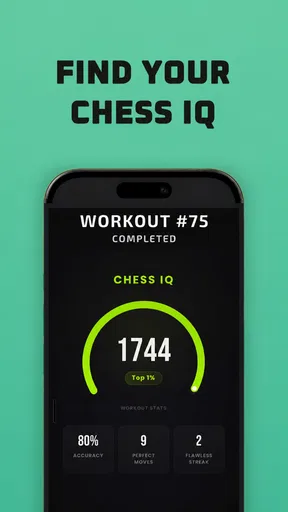
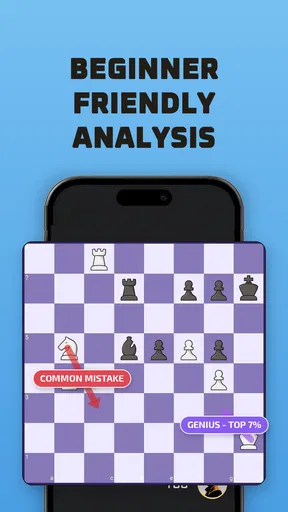
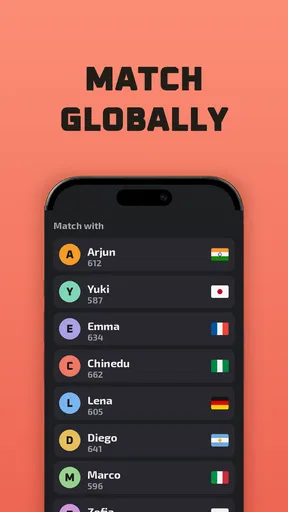
 Analysis by AppCompare
I approached Zapp Chess as a quick board game rather than as a replacement for a full chess platform, and that distinction explains most of its appeal. It is built for the moment when I want to think about a position, make a few meaningful decisions, and finish before the rest of my break disappears. The game’s central promise is simple: a short chess experience that does not expect me to begin with a lesson in openings or spend an evening studying endgames.
That makes it immediately approachable, especially for somebody who knows how the pieces move but still feels uncomfortable joining a traditional chess app. In my experience, the strongest part of this design is not speed by itself. It is the reduction of the usual intimidation. A new player can concentrate on seeing threats, protecting valuable pieces, and choosing a sensible move instead of worrying about whether the first move belongs in a famous opening.
At the same time, this is still a chess game, not a magic shortcut to chess improvement. Short sessions can sharpen attention and create a useful habit, but they cannot replace the depth of a conventional match when I want long-term planning, detailed analysis, or a serious competitive environment. My overall view is favorable: this is a good fit for casual learners and busy players, provided they understand that convenience is the point, not complete chess training.
How the short format changes the way I play
The most noticeable difference is the rhythm. A normal chess session can feel like an appointment because I need enough uninterrupted time to settle into the position. Here, the three-minute focus changes my decisions from the very beginning. I am encouraged to recognize practical opportunities quickly rather than build a large mental tree of possible variations.
That does not make every move shallow. In fact, the limited window makes simple habits more important. I find myself checking whether my king is exposed, whether an opposing piece is attacked, and whether a capture creates a new problem before moving. Those checks are useful for beginners because they turn chess into a sequence of manageable questions. Instead of memorizing a long opening line, I can build a routine around safety and purpose.
The format also makes mistakes feel less expensive. In a long game, an early blunder can leave me stuck with a difficult position for a considerable time. In a short game, I can treat the result as a compact lesson and try again. That is a meaningful advantage for hesitant players. The emotional barrier to starting another game is lower, so practice becomes more regular.
There is a trade-off, though. Fast chess rewards practical decisions, and practical decisions are not always the most educational ones. If I rush every move, I may learn to react without understanding why a position works. I recommend using the brief games as exercises in awareness, then occasionally slowing down elsewhere to examine the ideas behind the moves. Zapp Chess works best as an accessible entry point, not as the only way I interact with chess.
Worth Reading Before You Choose

EA SPORTS FC Mobile 26 Is a Bigger Football Game, but It Takes Time

Flipboard Shows What News Apps Must Do Beyond the Feed

Switching to Android Auto Means Rethinking Your Driving Routine

Google Calendar Makes a Crowded Week Easier to Manage

Ludo King Makes the Most of the Minutes Between Plans

Baby Panda World Brings Quick Play to Modern Phones, but Its Game Library Feels Busy
A useful routine for beginners
My favorite way to approach a session is to give each move a tiny checklist. First I look for an immediate threat. Then I ask whether one of my pieces is undefended. Finally, I choose between developing, capturing, defending, or creating a threat of my own. This takes only a moment, but it prevents the most common beginner mistake: moving because a piece looks active without considering what the opponent can do next.
A second helpful habit is to review the reason for a loss in one sentence. I might describe it as “I ignored a loose knight” or “I attacked too early and left my king open.” That is more useful than simply replaying the entire game without a question in mind. The short format gives me many opportunities to test one correction at a time.
Players who already know standard openings may need to adjust their expectations. The game’s beginner-friendly approach is refreshing when I want freedom from theory, but it may feel limited if my main pleasure comes from preparing specific lines or comparing opening statistics. A dedicated chess service is usually better for that kind of study.
What the beginner-first design gets right
The biggest strength is psychological. Many people understand the rules but avoid chess because the surrounding culture can make every game feel like an exam. Zapp Chess lowers that pressure. I can start with basic principles, make imperfect decisions, and still feel that the session has a clear shape.
This also makes it suitable for small gaps in the day. I can imagine playing during a coffee break, while waiting for an appointment, or after finishing a few household tasks. The important point is not merely that the game is short. It is that the short session has a defined purpose: make decisions, notice patterns, and move on.
Another concrete strength is the way the format encourages repeat attempts. A beginner often improves more from trying a similar situation again than from reading a long explanation in isolation. If I lose because I moved a piece twice while leaving the center unattended, the next game gives me an immediate chance to try a calmer plan. That feedback loop is more inviting than a large library of lessons that I may never open.
I also like the possibility of using it as a warm-up. Before a longer match, a quick game can help me shift attention away from notifications and into the board. I would not treat the result as a measure of my complete chess ability, but it can reveal whether I am overlooking simple attacks or moving too impulsively.
The limits I would want a serious player to consider
The same simplicity that welcomes beginners can disappoint experienced players. Someone looking for a broad competitive ecosystem, deep post-game analysis, extensive opening preparation, or a structured training curriculum may find a traditional chess platform more suitable. Zapp Chess is focused enough that it should not be judged by features belonging to a different kind of product.
The three-minute structure can also create pressure for the wrong reason. A new player may understand the position but struggle to act quickly, especially when several pieces are under attack. That can make a loss feel like a time-management failure rather than a chess lesson. I would encourage beginners not to chase speed immediately. First learn to make safe, purposeful moves; speed tends to improve as recognition becomes familiar.
There is also a risk of developing a narrow style. Repeated short games can make me favor immediate threats and quick exchanges, while longer chess asks me to appreciate quiet improvements and plans that take time to mature. If strategic depth is my main goal, I should balance this game with slower matches and deliberate review.
The free entry is welcome, but in-app purchases range from forty-nine cents to one hundred forty-nine dollars per item. That wide range is worth noticing before spending. I would begin with the free experience and decide whether any optional purchase genuinely improves my personal routine. A beginner should never feel that buying something is a substitute for learning how pieces coordinate.
The age rating is Everyone, which fits the straightforward board-game concept and makes it an easy recommendation for families looking for an approachable chess option. Still, an age rating does not guarantee that every child will enjoy the time pressure. Younger players may benefit from an adult playing alongside them or discussing why a move was chosen, rather than treating every result as a contest.
Where it fits among ordinary chess alternatives
Compared with a physical chessboard, this game is more convenient for a solo session and removes the need to find an opponent at the same table. A real board remains better for face-to-face conversation, teaching a child through touch, or studying a position without a clock-like sense of urgency. I see the digital version as complementary rather than superior.
Compared with a full-featured online chess service, Zapp Chess feels more focused on getting a beginner into a playable situation quickly. A larger platform is generally the better choice when I want tournaments, a wide range of time controls, extensive player matching, or detailed analysis tools. The advantage here is that I am less likely to be distracted by a crowded competitive environment.
Compared with chess puzzles, it offers a more complete decision cycle. A puzzle usually tells me that a tactical solution exists; a game does not. That uncertainty is valuable because I must decide whether to attack, defend, exchange, or wait. On the other hand, puzzles are better when I want to isolate a specific tactical pattern and repeat it until the idea becomes automatic.
Compared with a chess lesson app, this is more active and less instructional. I learn by making choices rather than following a planned explanation. That can be motivating, but it also means I need to supply some reflection myself. If I want a guided path through rules, notation, tactics, and strategy, a dedicated learning course may be the stronger companion.
Who will get the most from it
I would recommend it first to people who know the basic moves but have not yet found a comfortable way to play regularly. It is especially appealing if a full chess match feels too long, if opening names create anxiety, or if the idea of losing publicly makes online chess unattractive. The short format gives those players a low-pressure way to build familiarity.
It also suits casual players who want a small mental break rather than a lengthy hobby session. The game can fit into a daily routine without demanding a large block of time. A practical workflow is to play one session, write down the single decision that caused the most trouble, and use that observation as the focus for the next session. That turns quick entertainment into modest, repeatable practice.
Parents and educators may find it useful as an introduction, but I would not leave the teaching entirely to the app. A child can learn more from being asked “What is your opponent threatening?” than from simply receiving a win or loss. The game supplies the board and the challenge; conversation supplies much of the explanation.
I would be more cautious recommending it to tournament-minded players, advanced students, or anyone who wants a precise record of improvement across many forms of chess. Those users may prefer a platform designed around analysis and competition. I would also point people toward a slower alternative if they dislike clocks, become frustrated by rapid decisions, or enjoy spending several minutes on one position.
Practical details before installing
DAB Games is the developer behind this board game, which is available free of charge. It has reached over one hundred thousand installs and holds a 4.3 average from around one and a half thousand ratings, with twenty-three written reviews. Those figures suggest that the concept has found an audience, but I would still judge it by my own preferred pace rather than by popularity alone.
The current version is 1.1.104, and the game requires Android 7.0 or later. That makes checking the operating system worthwhile on an older phone before installation. The Everyone content rating is reassuring for general access, while the optional purchase range means I would keep an eye on payment prompts if a child uses the device.
One question many new players have is whether they need opening knowledge before starting. My answer is no: basic piece movement, check, and checkmate are enough to begin. I would focus on developing pieces, keeping the king reasonably safe, and avoiding free captures. The game’s beginner orientation is most useful when I treat each match as a place to practice those fundamentals rather than as a test of memorized theory.
Another likely concern is whether a short game can really improve chess. It can improve awareness and decision habits, particularly if I reflect on mistakes instead of immediately starting another game. It is less effective for learning deep positional planning on its own. The best answer depends on the goal: for confidence and repetition, it works well; for comprehensive training, I would add slower games, puzzles, or guided study.
Players may also wonder whether free access is enough. I would start without spending anything and use the game long enough to see whether the pace fits. Since optional items can be inexpensive or very costly, I would make each purchase decision separately and avoid assuming that a higher price automatically means a better learning experience.
My final recommendation
Zapp Chess succeeds because it understands a real obstacle in beginner chess: many people do not need more theory at the start; they need a reason to sit down and make the first move. Its compact structure makes that easier, and the absence of opening pressure lets me concentrate on practical board awareness.
Its weaknesses are equally clear. Fast play can reward rushing, the format is not a substitute for deep study, and experienced players may outgrow the beginner-first approach. Those are not deal-breakers, but they define the audience. I would skip it if my priority were tournament preparation, detailed analysis, or long strategic battles.
For everyone else, especially a curious newcomer with only a few spare minutes, I think it is worth trying. Use it as a friendly daily exercise, pause after losses to identify one concrete mistake, and combine it with slower chess when you want deeper understanding. My recommendation is simple: choose it for approachable, repeatable chess practice, not for the complete chess ecosystem.
Pros
- Quick online matchmaking with players of different skill levels.
- Practice games against computer opponents are available.
- Clean board design keeps moves easy to follow on mobile screens.
- Supports short sessions
- making it suitable for playing on the go.
- Useful for improving tactics through regular competitive play.
Cons
- Match quality may vary when opponents have very different experience levels.
- A stable internet connection is needed for most online matches.
- Small screens can make precise piece selection uncomfortable for some users.
- Beginners may find the initial learning curve challenging without guidance.
- Notifications and online features may consume extra battery during long sessions.
FAQs for Zapp Chess: Online Chess Game
What is Zapp Chess: Online Chess Game?
Zapp Chess: Online Chess Game is a mobile chess app designed for playing classic chess matches against other people online. It typically offers a straightforward board interface, matchmaking, and options for casual or competitive games. Before downloading, users should check the current store description to confirm available modes, supported devices, account requirements, and whether the app includes advertisements or optional in-app purchases.
Can I play Zapp Chess online with friends or other players?
The main purpose of Zapp Chess is online chess, so players can generally expect to compete against opponents through internet-based matches. Depending on the version installed, this may include matchmaking with random players and possibly private games with friends. An internet connection is normally required, and features such as invitations, friend lists, rankings, or chat may vary between updates and regional releases.
Is Zapp Chess suitable for beginners?
Zapp Chess can be suitable for beginners who want a simple way to practice standard chess on a phone or tablet. New players should look for features such as legal-move guidance, timers, hints, tutorials, or an undo option, because their availability may differ by version. Experienced players may prefer the app for quick matches, while beginners should confirm whether lessons or offline practice are included.
Does Zapp Chess require an internet connection, and can it be played offline?
An internet connection is generally necessary for online matchmaking, account synchronization, leaderboards, and games against remote opponents. Some versions of chess apps also provide offline play against a computer, but this should not be assumed unless it is clearly listed in the app’s current description. Users with limited data should also check whether advertisements, updates, or sign-in services require additional connectivity.
Is Zapp Chess free to download, and are there advertisements or purchases?
Zapp Chess may be available as a free download, but free access does not always mean that every feature is included without limitations. The app may contain advertisements, optional purchases, premium upgrades, or other monetized elements. Before installing, review the Google Play or App Store listing for the latest pricing, permissions, subscription details, and refund information, since these conditions can change with updates.


